Rural Community Immigration Pilot (RCIP) 2026: Complete Guide
By WelcomeAide Team
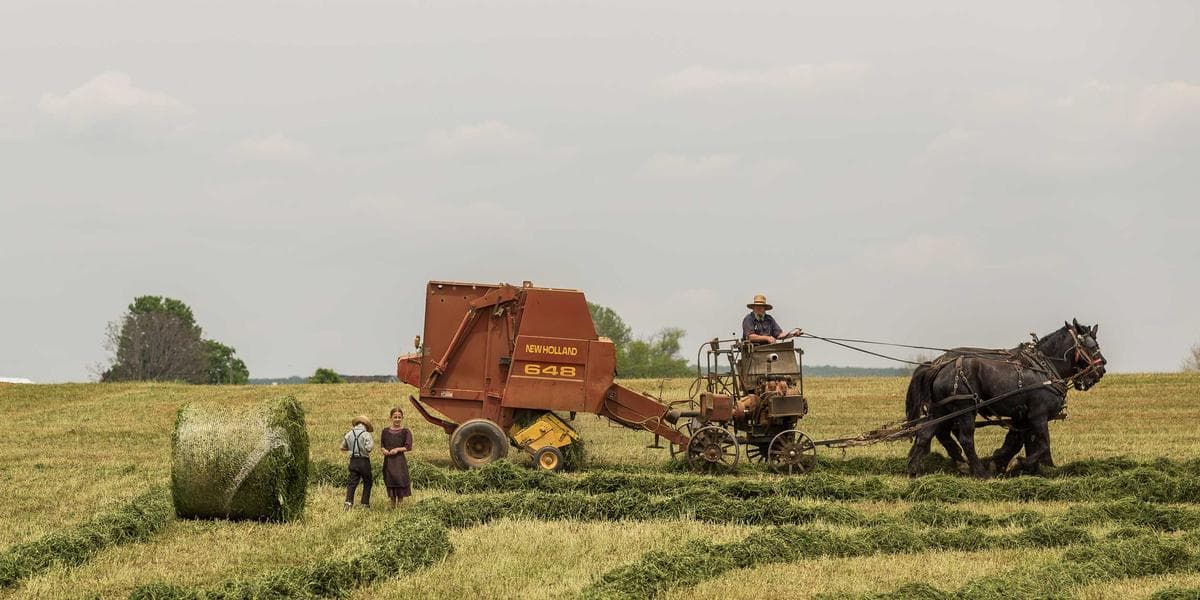
Canada's rural communities are the foundation of the country's natural resource economy, agricultural production, and regional identity. Yet many smaller towns and cities face a common challenge: attracting and retaining enough workers to sustain local businesses, healthcare services, and public institutions. The Rural Community Immigration Pilot (RCIP) was designed to address this challenge by giving designated communities the tools to recruit and retain newcomers who want to settle permanently in rural Canada. In 2026, the program has expanded to 14 communities across six provinces, offering a unique pathway to permanent residence for candidates who secure a job offer from a designated employer.
This comprehensive guide covers every aspect of the RCIP for 2026, including the full list of participating communities, eligibility requirements, settlement fund thresholds, and the step-by-step application process. If you are considering life in a smaller Canadian community, this guide is for you. For an overview of all 2026 immigration changes, including Express Entry updates, see our Complete Guide to Express Entry 2026.

What Is the Rural Community Immigration Pilot?
The RCIP is a community-driven immigration program that allows designated rural communities to recommend candidates for permanent residence. Unlike Express Entry, which is managed federally using CRS scores and automated draws, the RCIP is built around direct connections between newcomers and communities. Candidates need a qualifying job offer from a designated employer in a participating community, and the community itself plays a role in assessing whether the candidate is a good fit.
The pilot was first launched in 2019 as the Rural and Northern Immigration Pilot (RNIP), which included 11 communities. The 2026 iteration has been rebranded as the RCIP, expanded to 14 communities, and refined based on lessons learned from the original pilot. The program operates alongside, but separately from, Express Entry and Provincial Nominee Programs. Candidates do not need an Express Entry profile to apply through the RCIP.
Official program details are available on the IRCC Rural Community Immigration Pilot page.
The 14 Participating Communities in 2026
The RCIP currently includes 14 communities across six provinces. Each community has its own economic development corporation or local immigration partnership that manages the program locally, including identifying designated employers and recommending candidates.
Ontario (5 communities)
- North Bay: Located in northeastern Ontario, North Bay is a regional hub for healthcare, education, and the Canadian Armed Forces base at CFB North Bay. The city has a population of approximately 52,000 and offers affordable housing compared to southern Ontario.
- Greater Sudbury: Sudbury is northern Ontario's largest city and a centre for mining, healthcare, and post-secondary education. Laurentian University and Cambrian College are major employers alongside the mining sector.
- Timmins: A resource-based city in northeastern Ontario with strong ties to mining and forestry. Timmins also has a growing healthcare and social services sector.
- Sault Ste. Marie: Located on the Ontario-Michigan border, Sault Ste. Marie has a diversified economy that includes steel manufacturing, healthcare, tourism, and information technology.
- Thunder Bay: The largest city in northwestern Ontario, Thunder Bay serves as a transportation hub and regional centre for healthcare, education, and natural resource industries.
Manitoba (3 communities)
- Altona/Rhineland: A close-knit agricultural community in southern Manitoba with a strong manufacturing sector. The region has a long history of welcoming newcomers and offers a supportive settlement environment.
- Brandon: Manitoba's second-largest city, Brandon is a regional centre for agriculture, food processing, education, and healthcare. Brandon University and Assiniboine Community College are significant employers.
- Steinbach: One of Manitoba's fastest-growing communities, Steinbach has a thriving economy centred on manufacturing, retail, and services. The city has been a national leader in newcomer settlement for its size.
British Columbia (2 communities)
- West Kootenay (Trail, Nelson, Rossland, Castlegar): A cluster of communities in southeastern British Columbia known for outdoor recreation, mining, and forestry. The region also has a growing technology and creative economy.
- North Okanagan-Shuswap (Vernon, Armstrong, Enderby, Salmon Arm): Located in the interior of British Columbia, this region offers a strong agricultural base, tourism industry, and affordable living relative to Vancouver and the Lower Mainland.
Nova Scotia (1 community)
- Pictou County (New Glasgow, Pictou, Stellarton, Westville, Trenton): A cluster of towns on Nova Scotia's Northumberland Shore with a diversified economy including manufacturing, healthcare, and shipbuilding.
Saskatchewan (1 community)
- Moose Jaw: Located south of Regina, Moose Jaw has a growing economy driven by agriculture, transportation, tourism, and the nearby 15 Wing military base.
Alberta (1 community)
- Claresholm: A small town in southern Alberta situated between Calgary and Lethbridge. Claresholm's economy is rooted in agriculture and is growing through diversification into renewable energy and light manufacturing.
Eligibility Requirements
To apply through the RCIP, candidates must meet several federal and community-level requirements. Here is a detailed breakdown.
Job Offer
You must have a genuine, full-time, non-seasonal job offer from a designated employer in one of the 14 participating communities. The employer must be approved by the local community's economic development organization. The job must be permanent or have no defined end date, and it must pay at or above the prevailing wage for the occupation in the region.
Work Experience
You need at least one year (1,560 hours) of qualifying work experience in the occupation specified in your job offer, or in a related occupation. This experience can be gained in Canada or abroad and must fall within the three years preceding your application. The work experience must be at the skill level corresponding to your job offer's TEER category.
Language Proficiency
Language requirements vary by the TEER level of your job offer. The minimum Canadian Language Benchmark (CLB) scores are as follows.
- TEER 0 and TEER 1 occupations: CLB 6 in all four abilities (reading, writing, listening, speaking)
- TEER 2 and TEER 3 occupations: CLB 5 in all four abilities
- TEER 4 and TEER 5 occupations: CLB 4 in all four abilities
You must take an approved language test (IELTS General, CELPIP, TEF, or TCF) and submit valid results with your application.
Education
You must have at least a Canadian high school diploma or an equivalent foreign credential. If your education was completed outside Canada, you will need an Educational Credential Assessment (ECA) from a designated organization to verify its Canadian equivalency.

Settlement Fund Requirements
RCIP applicants must demonstrate that they have sufficient funds to support themselves and their families upon arrival in the community, unless they are already living and working in Canada. The required amounts for 2026 are based on family size.
- Single applicant: $10,507 CAD
- Family of 2: $13,108 CAD
- Family of 3: $16,101 CAD
- Family of 4: $19,524 CAD
These amounts are updated periodically by IRCC based on the Low Income Cut-Off (LICO) figures published by Statistics Canada. You must provide proof of funds, typically in the form of bank statements, investment account statements, or a combination of liquid assets. The funds must be readily available and not borrowed. For the latest figures, check the IRCC RCIP eligibility page.
The Application Process Step by Step
Applying through the RCIP involves several stages that combine community-level assessment with federal immigration processing.
- Step 1: Find a designated employer. Search for job opportunities with employers designated by one of the 14 participating communities. Each community maintains a list of approved employers on their local RCIP website. You can also search Canadian job boards and specify the community name to find relevant openings.
- Step 2: Secure a qualifying job offer. Apply for and receive a genuine, full-time job offer from a designated employer. The offer must meet the program's wage and permanency requirements.
- Step 3: Apply for community recommendation. Submit an application to the local community's economic development organization. They will assess your fit for the community, including your intention to settle permanently, your connections to the area, and your ability to contribute to the local economy.
- Step 4: Receive a community recommendation. If your application is approved, the community will issue a recommendation letter that you include with your federal immigration application.
- Step 5: Apply for permanent residence. Submit your permanent residence application to IRCC, including your community recommendation, proof of job offer, language test results, educational credentials, police certificates, medical examination results, and proof of settlement funds.
- Step 6: Wait for processing. IRCC processes RCIP applications and issues a final decision. Processing times vary but typically range from 12 to 18 months.
Throughout this process, our newcomer checklist can help you track each milestone and ensure you have all required documents ready.
Why Choose Rural Canada?
Life in a smaller Canadian community offers many advantages that larger cities cannot match. Housing is significantly more affordable, with average home prices in RCIP communities often a fraction of those in Toronto, Vancouver, or Montreal. Commute times are shorter, access to nature is immediate, and community ties are stronger. Many newcomers who settle in rural areas report higher life satisfaction and a stronger sense of belonging compared to those in large urban centres.
Rural communities also tend to offer more personalized settlement support. Local immigration partnerships, newcomer welcome centres, and community organizations work closely with new arrivals to help them find housing, enrol children in school, access healthcare, and integrate into social and cultural life. For tips on settlement and integration, CIC News publishes settlement guides tailored to newcomers across Canada.
Frequently Asked Questions
Can I switch employers after arriving in the community?
Your initial job offer must be with a designated employer in the participating community. Once you receive permanent residence, you are free to change employers or move to a different location in Canada. However, the RCIP is designed for candidates who intend to settle permanently in the community, and demonstrating genuine intent is part of the community recommendation process.
Do I need an Express Entry profile for the RCIP?
No. The RCIP is a separate immigration pathway that does not require an Express Entry profile. You apply directly through the community and then submit a permanent residence application to IRCC. However, having an active Express Entry profile alongside an RCIP application is allowed and may provide additional pathways.
What if there are no designated employers hiring in my occupation?
Each community designates employers based on local labour market needs. If no designated employer is currently hiring in your field, you can monitor the community's RCIP page for updates or explore opportunities in other participating communities. Job availability changes throughout the year as employers' needs evolve.
Can I bring my family with me?
Yes. Your spouse or common-law partner and dependent children can be included in your permanent residence application. Settlement fund requirements increase with family size, so make sure you have sufficient funds for your entire family unit.
What happens if I lose my job after arriving?
If you lose your job after receiving permanent residence, your immigration status is not affected. As a permanent resident, you have the right to live and work anywhere in Canada. However, if you lose your job during the application process (before receiving PR), you should notify IRCC, as a valid job offer is a core requirement of the RCIP application.
Start Your Rural Canada Journey with WelcomeAide
The RCIP offers a genuine opportunity to build a new life in one of Canada's welcoming rural communities. Whether you are drawn to the natural beauty of British Columbia's Kootenay region, the vibrant economy of Steinbach, or the healthcare opportunities in Sudbury, WelcomeAide is here to help you every step of the way. Ask Aida, our AI assistant, for personalized guidance on the RCIP process, use our credential recognition tool to verify your qualifications, and explore settlement resources with our platform. Rural Canada is ready to welcome you, and your new community is waiting.
Related Resources
WelcomeAide Tools
- WelcomeAide Blog - browse all newcomer guides and updates
- Ask WelcomeAide AI - get personalized answers to immigration questions
- Newcomer Checklist - track your immigration and settlement steps
- Rights Guide - understand legal rights and protections in Canada
- Settlement Programs - find settlement and integration support services
Related Guides
- Military Recruits: New Express Entry Pathway 2026
- Canada Express Entry 2026: Complete Guide to All New Changes
- Transport Workers and Pilots: New Express Entry Category 2026
Official Government Sources
Keep WelcomeAide Free
This guide is free, and always will be.
WelcomeAide is a nonprofit. If this helped you, a small donation keeps us running for the next newcomer.
Support WelcomeAideFree Tools for You